
Daily Practices to Reduce Screen Time and Build Family Presence
A version of this post first appeared in The Bridge, our newsletter.
Across the families who come through my practice, a pattern. The children cannot put their phones down. The adults are not far behind. Both are anxious without their devices. Both are disconnected from the present, from each other, and from anything resembling stillness.
This was on my mind during a recent return trip to Japan. The spiritual life of the country is not, for most people, a matter of doctrine. Shinto and Buddhism merged long ago into something less doctrine than practice, a way of being woven into ordinary life. Shrines visited on the way to work. A daily acknowledgment that we inhabit a world with forces outside our control: wind, rain, lightning, sun, fire, water. These elements sustain us. They are also entirely beyond us, and our of our humanly control.
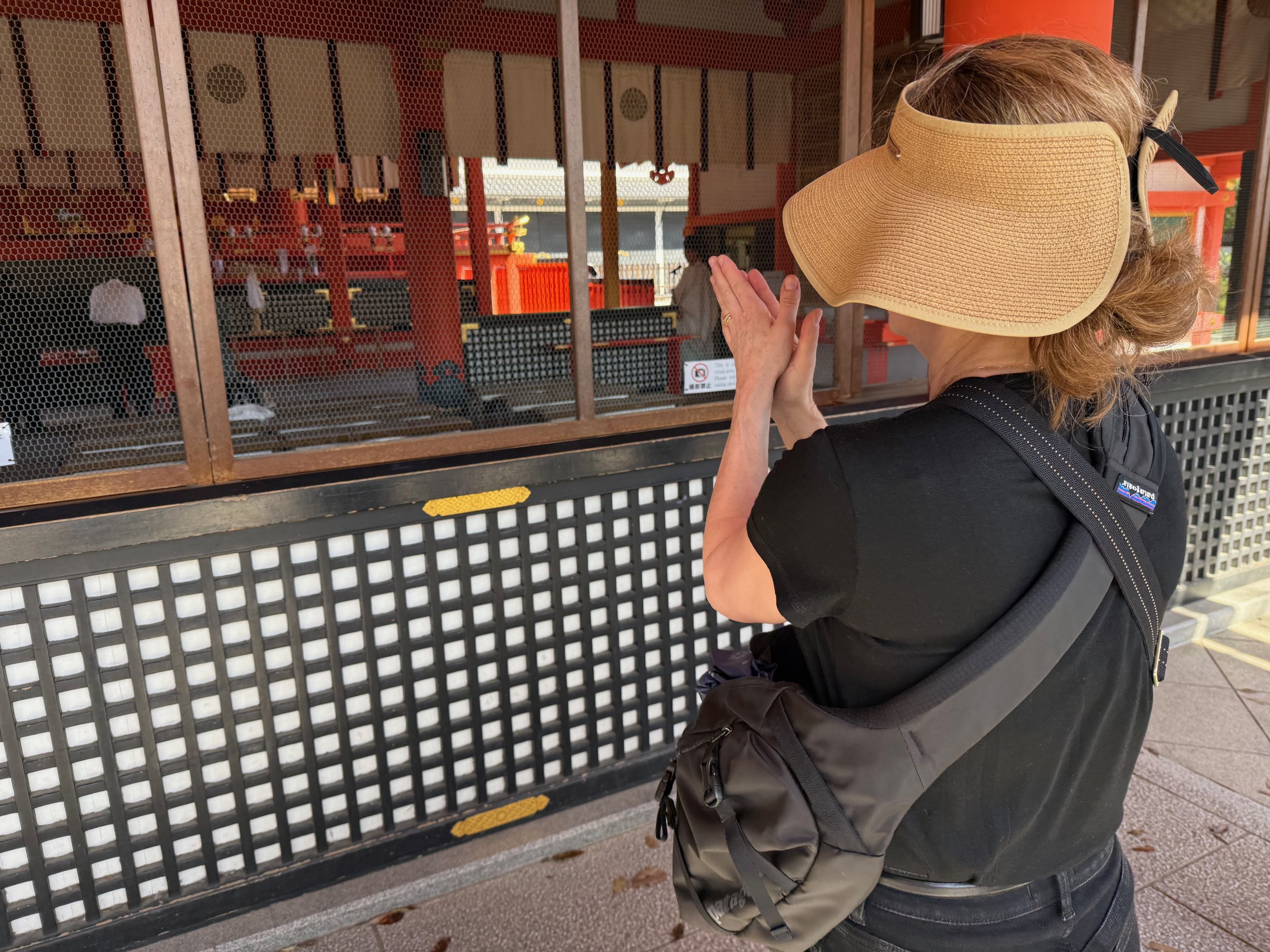
Ni-rei Ni-hakushu Ichi-rei (Two Bows, Two Claps, One Bow)
While visiting many Buddhist and Shinto shrines from Tokyo to Kyoto and in the surrounding mountains, I took every opportunity to express gratitude for the work that I do at Crossbridge, helping people find a path to wellness.
It is not unique to Japan. Native American traditions pay similar respect to the same elements. Both place humans inside the natural world rather than above it.
We have lost much of that here. We as Americans have moved away from community. We are isolating. The shared ways of being that used to hold us together (watching the same few television programs, reading the same newspaper, going to churches that defined behavior) have largely fallen away. We have filled the gap with phones.
Many of the interventions we refer families to (meditation, mindfulness, time in nature, and wilderness therapy) are teaching them, in clinical settings, what daily life in Japan builds in by default. The Japanese practice of shinrin-yoku, "absorbing the forest atmosphere," names what older traditions have long known: nervous systems regulate in the presence of trees, weather, water, and silence.
The Science Behind Shinrin-yoku, Forest Bathing
Shinrin-yoku is not a metaphor or a lifestyle phrase. The Japanese Forestry Agency introduced it as a national health program in 1982, and doctors there now prescribe it as preventive medicine for chronic stress, hypertension, and anxiety [1].
A growing international body of research backs the practice. A 2017 systematic review and meta-analysis of twenty trials and 732 participants found that forest bathing significantly lowers both systolic and diastolic blood pressure [2]. Subsequent reviews have documented additional measurable effects: reductions in stress hormones (cortisol and adrenaline), increased parasympathetic nervous system activity, improved sleep, and elevated activity of natural killer cells associated with immune function [1]. A 2026 meta-analysis in Frontiers in Psychology concluded that forest bathing produces measurable improvements in depression and anxiety symptoms, and supports its use as a non-pharmacological complement to mental health treatment [3].
The proposed mechanism is both chemical (the inhalation of phytoncides, the volatile organic compounds emitted by trees) and physiological (the regulating effect of sustained sensory exposure to a non-human-built environment).
For the families I work with, the implication is not that they need to find a Japanese cypress forest. It is that the effects of intentional time outside are measurable, replicable, and clinically meaningful. Daily walks, weekend time in green or wild spaces, even the practice of opening windows: these are small, accessible versions of the same intervention.
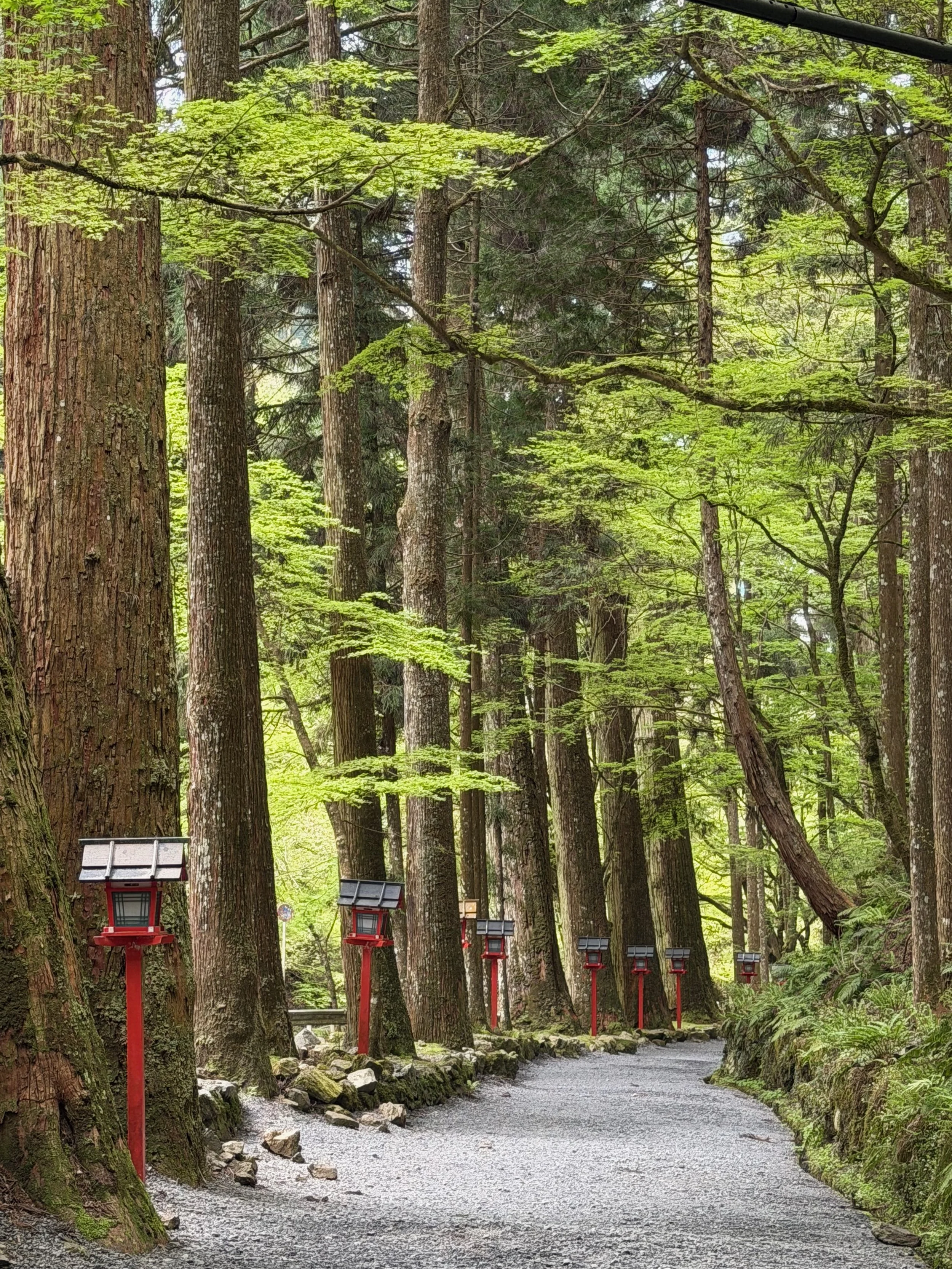
While the mountains outside of Kyoto are a perfect setting
for practicing shinrin-yoku, you don’t need to go to Japan to experience the benefits of forest bathing.
The question families ask me, again and again, is what a household can actually do. How do you bring even a small version of this into a life that has not been built to hold it?
Below are practices I offer. All of them are small. None of them require a a therapeutic intervention or program. The goal is not to optimize a child's nervous system. It is to change what life in a household feels like, for everyone in it, children and adults alike.
Practices in Nature
The point is not the dose. It is the relationship.
The Daily Walk
Twenty minutes outside, phone left at home or silenced in a pocket. The same loop is fine. The familiarity is the point. Walks are not a workout, and they are not a meditation. They are a small daily practice in being outside … breathing the fresh air, noticing a flower ready to bloom, or hearing a bird chirp.
Morning Coffee Outside
When weather allows, even briefly. Starting the day outside, rather than inside a screen, changes how the morning unfolds. Families who try this often report that the first conversation of the day lands differently. I’m old school and still read a paper newspaper … my routine is to make my coffee, and walk outside to collect the morning paper at the end of the driveway.
One Unstructured Weekend Block
A morning or an afternoon, in a green or wild place, without mileage goals or destinations. Not a hike to be completed. Just time spent outside, without a plan. Children left to wander within reasonable bounds will find their own rhythms.
Open Windows
The acoustic environment of a home matters more than most parents realize. Weather sounds, wind, birds, traffic at a distance, the world beyond the walls. Sealed rooms with white noise and screens create a sensory environment that is constant and entirely human-made.
Something Alive to Tend
Houseplants, a small garden, a bird feeder visible from a window. Daily care for something that responds to attention without demanding it. For children, noticing a plant's needs is a small daily practice in paying attention to something other than themselves.
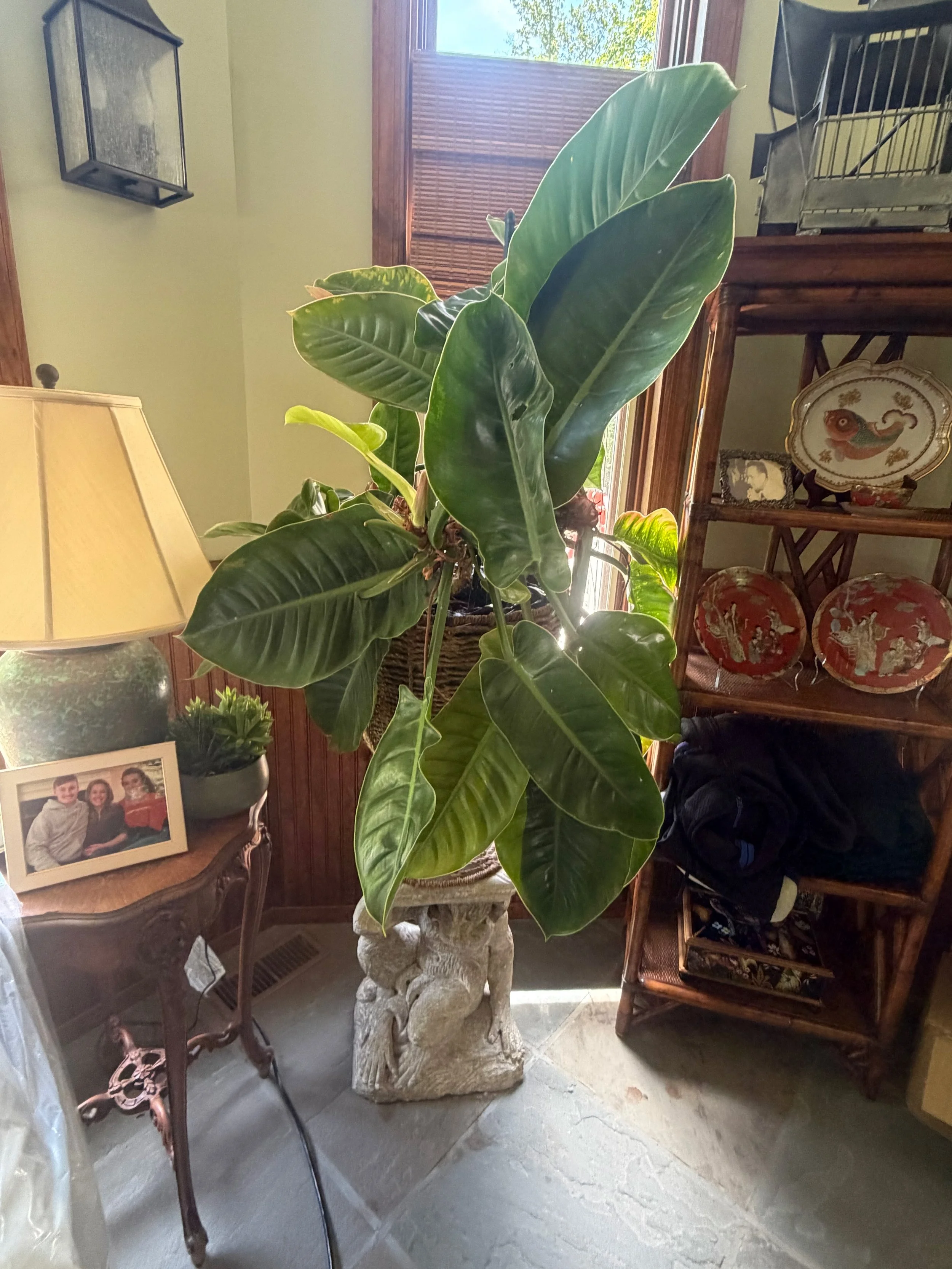
This is one of my own - it’s around twenty years old, and brings me joy. When my kids were living at home, one of their chores was to water her.
Boundaries with Technology
These work only if parents abide by the same rules. Modeling is the intervention.
Phones Out of Bedrooms
Every member of the family. Charge them in the kitchen, the living room, anywhere except where people sleep. The bedroom is the first place adolescents lose the boundary, and the place where the most damage to sleep, mood, and family connection accumulates.
No Phones at Meals
Without exception. The "I'll just check this one thing" is the failure point. A meal interrupted by a phone is no longer a meal.
The First and Last Hour
A phone-free first hour and last hour of the day, for the family as a unit. Beginning and ending the day inside a screen leaves no margin for the household to find its own footing.
For Struggling Adolescents, Removal Over Limits
For children whose anxiety, mood, or behavior is being compounded by particular apps, removal is often cleaner than time limits. Limits invite negotiation, workarounds, and a daily power struggle. Absence eventually invites adaptation. This is a harder conversation but a shorter one.
The research backs reducing access. The U.S. Surgeon General's 2023 advisory on social media and youth mental health summarizes randomized trials in which deactivating a social media platform for several weeks improved subjective well-being substantially, with the largest effects in adolescents who began the studies with the highest baseline symptoms [4].
Schools are catching on. As of early 2026, more than thirty states have enacted laws or policies restricting cell phone use in K–12 classrooms, with the majority of those laws passed in 2025 alone, driven largely by concerns about adolescent mental health and academic performance [5]. What used to feel like an isolated household decision is increasingly the public norm.
For Parents, Notice Your Own Checking Behavior
A parent on their phone during family time undermines every rule asked of a child. Children do not absorb the rules. They absorb the behavior. The hardest part of this intervention is the adults.
A Daily Ritual
Small and ritual beats earnest and effortful.
One Thing You Noticed Today
A shared dinner with a single-sentence acknowledgment from each person. Not "what are you grateful for," which can feel like homework, but "one thing you noticed today." The reframe matters. Noticing is a lower bar than gratitude, and it tends to surface more honest material.
One Unhurried Meal a Week
Sunday breakfast, Friday dinner, whatever fits the household. One meal that is not optimized for efficiency. No phones, no agenda, nowhere to be afterward. This is where children begin to learn that family time is not a transaction.
A Threshold Ritual
A small, repeated gesture that marks a transition. Lighting a candle at dinner. Opening a window in the morning. Three breaths before getting out of the car at school drop-off. The form matters less than the regularity. This is the closest American analog to the shrine on the way to work.
One Half-Day of Nothing
Per week, per family member if possible, but at minimum for the child who is struggling. Unstructured, undirected, no plan. Boredom is the gateway to imagination and self-regulation, not the enemy of them. A child who has never been bored has not had the chance to find out what they want.
For more reading on ritual - visit two of Rebekah’s blogs here - they are rich, and meaningful: The Power of Ritual and Rituals in Schools: Why “Not Much’ is Actually A Lot.
What This Is, and What It Is Not
These practices are not a treatment plan. They are not a substitute for therapy, medication, or placement when those are needed. The families who come to Crossbridge are often well past the point where a daily walk will resolve what is happening at home.
But every clinical intervention works better in a household that has its own rhythm. Programs work better when the family the child returns to has changed - where the parents have done their work. Therapy lands deeper when the daily texture of life is not actively undoing the work.
The families who come to us are looking for placements, answers, relief. What makes any of those work, eventually, is often what was missing at home in the first place: a household where people have the chance to breathe, to think, and most importantly, to be connected.
Sources
[1] Li Q. Effects of forest environment (Shinrin-yoku/Forest bathing) on health promotion and disease prevention — the Establishment of "Forest Medicine". Environ Health Prev Med. 2022;27:43. doi: 10.1265/ehpm.22-00160. PMID: 36328581; PMCID: PMC9665958.
[2] Ideno Y, Hayashi K, Abe Y, et al. Blood pressure-lowering effect of Shinrin-yoku (Forest bathing): a systematic review and meta-analysis. BMC Complement Altern Med. 2017;17:409. PMC5559777.
[3] Short-term cardiovascular and mental health responses to Shinrin-Yoku (forest bathing): a systematic review and meta-analysis. Frontiers in Psychology. 2026. Link.
[4] Office of the U.S. Surgeon General. Social Media and Youth Mental Health: The U.S. Surgeon General's Advisory. 2023. NCBI Bookshelf.
[5] Ballotpedia. State policies on cellphone use in K-12 public schools. Updated 2026. Link.
Further Reading
Association of Nature and Forest Therapy (ANFT). A US-based organization that certifies forest therapyguides worldwide. Their directory helps readers locate a guide, and their research page collects supporting studies.
TreeSisters — Forest Bathing. An accessible introduction with a free downloadable guide.
Forestry England — Your Guide to Forest Bathing. Practical tips for beginners from the UK forestry body.
