
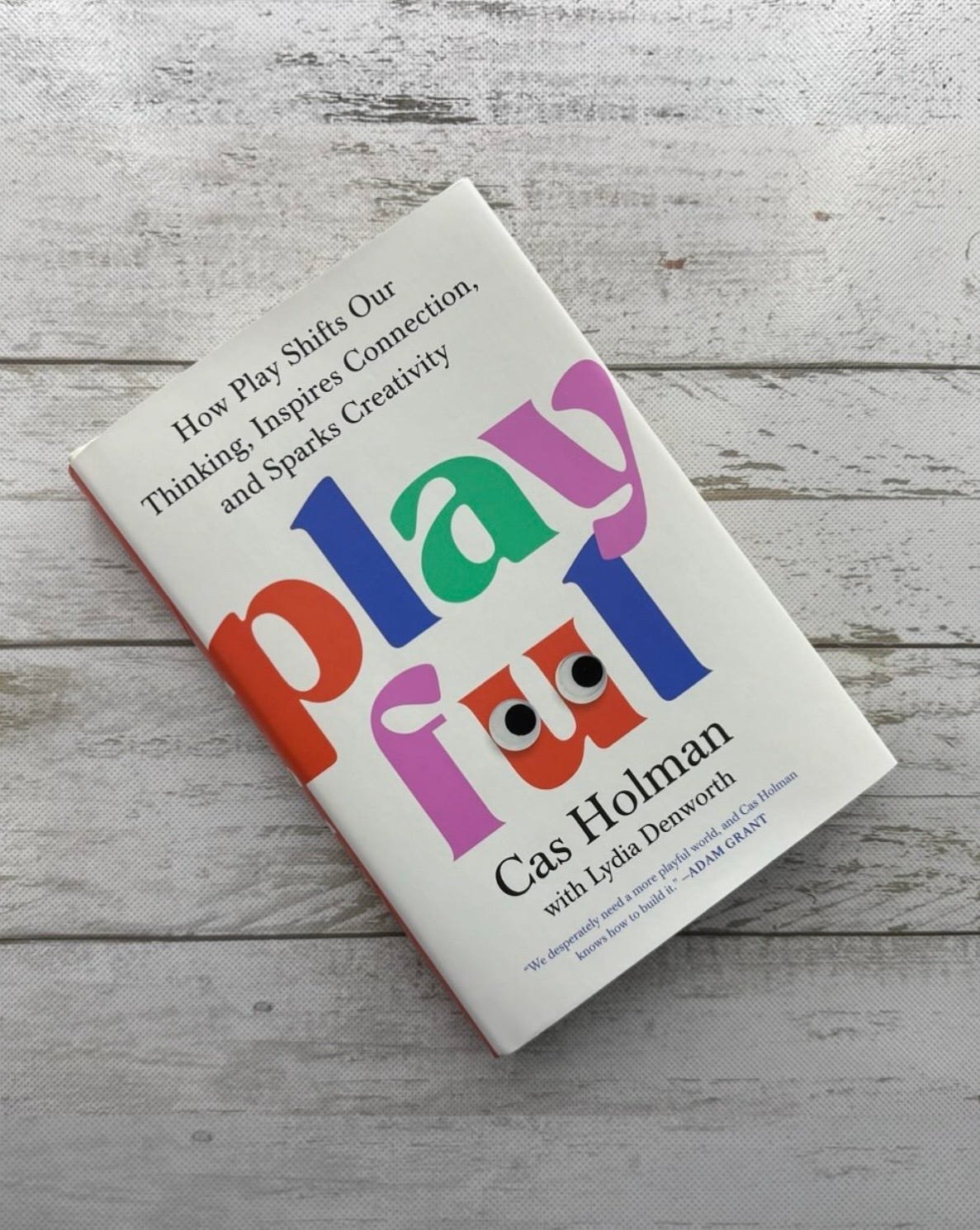
A Playful Conversation with Carly Siebald, SLP - a discussion of the book Playful by Cas Holman
Play in its many forms is both joyous and productive for ever-growing minds, child and adult alike. In the transcript of a virtual morning coffee chat, Rebekah Jordan (M.Ed) and Carly Siebald (SLP) convene to discuss the book Playful by Cas Holman and its impact on parenting and Siebald’s speech-language pathology work. The link to the interview itself can be found here. The chat took place on May 19th, 2026 via Zoom.
Rebekah: Good morning!
Carly: Good morning.
Rebekah: So, thank you for coming to just chat with me about this. I feel like we already got a chance to do it at a coffee shop, but that it would be fun to be able to let other people into our brain and–
Carly: –absolutely–
Rebekah: –brains plural (we don't share one!), and then you know it's been a while since both of us read this book, and I'm curious, what the lasting impact has been on both of our practice as parents and as professionals.
Carly: Absolutely.
Rebekah: For those of you who don't know, Carly Siebald is a friend and colleague, and we have worked together and shared cases in the past. Two weeks ago, she was our guest blogger, and is just an all around insightful, bright human. Carly, do you want to take a second and just tell everybody what you do for a living?
Carly: Well, first, thanks for having me here today. I am a pediatric speech and language pathologist, which means that I help kiddos who are having trouble speaking, using language, and communicating, whether that's the content of what they're trying to share and getting their messages across, or what they sound like (which is their articulation). People always think of lisps and fluency and things like that with speech therapy, but it really is much bigger.
One of the biggest branches, actually, of communication in little kids is their play, and it's something that I use a lot in my work. I play with children, but also I assess play skills. I work on play skill development. I work on milestones within play. So, while play from the outside looks like something that kids just do, and it's all well and good and fun, it actually does progress.
Little kids play in one way, and then they should start playing in more ways, in different ways, and with other children and by themselves. It really is something that is skillful and that I am always aware of in my clients. But reading this book really brought it much more into my home and my personal life. I can't stop telling people about it, and it's just been a really exciting kind of new rejuvenation for me in something that I take for granted because I do so much of it.
Rebekah: So you just answered one of my first questions, which is: Why was Playful so appealing to you?
And it sounds like it was some of that “refresh” energy.
The Value of Play
Carly: It was “refresh” energy. I listened to it, which was just delightful. The author Cas Holman just read it in such a fun and playful way. So it was just a great listen as a baseline, really engaging.
But it did also get me thinking about play in a critical way, but a different critical lens. Not necessarily developmental, but about the value of why we play, and not what I'm so used to saying: “This child can play at X age level, or needs to work on play” or, “This play skill is lacking.” The book really made me stop and think about how we're playing all the time, and everything we do can have a playful energy or approach to it, which was fun. It made me stop and think, and it made me try things, and take some risks, and it made me reevaluate my family and my children, and how they're moving through the world.
One of my favorite parts of the book, early on, is she talks about little children who are doing a thing, and then they fall down, and the instinct is to pick them up to resume what they were doing, but in falling down they found a whole new thing to do, because there's different things at that eye level or body position, and you can just evolve what you're doing into: now it's on the ground and it's different, and it just made me more flexible in thinking about transitions, and it was just fun. I hadn't thought of that, like we don't need to write up a child all of the time, we can just move with them into a new thing, metaphorically.
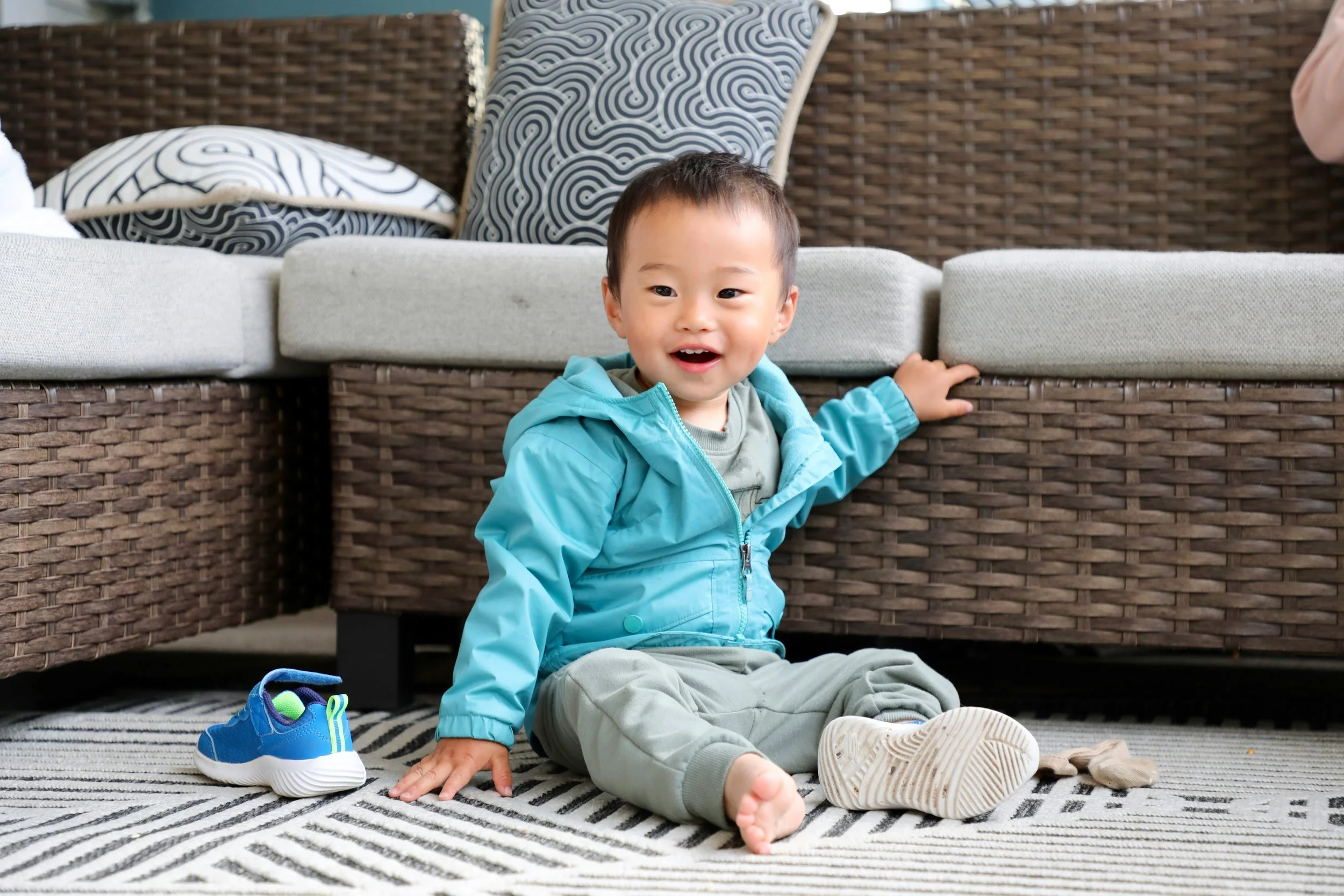
“…but in falling down they found a whole new thing to do, because there's different things at that eye level or body position, and you can just evolve what you're doing…”
Rebekah: Yeah, metaphorically.
I think it was appealing to both of us, probably for pretty similar reasons, right? I'm in the same boat. You recommended it to me. I promptly downloaded it on Audible, and have not been able to stop recommending it to people since. And I'm getting that, like, the scope of people I'm recommending it to, it does not matter what field they're in, what industry they're in, how they're connected to me.
There is a reason in almost every conversation for me to be like, "Have you read Playful? Have you read Playful?” No, but really, you need to read Playful by Cas Holman, because it is so universal to the experience. It's just like joy of play. I think you talked about your favorite part of the book. I think I had, I had two favorites. I had so many favorites.
Carly: Yeah, no, I had plenty more.
Rebekah: I have so many favorites, but one of the ones that really stood out to me was Cas describes carrying groceries into the house, and you know, a parental voice that says just take two bags and get them in, and then go back out for the two bags. You could drop one if you're carrying more, and she describes the, like, you know, stacking the bags up the arms, and what happens if I put one on a foot and try to hop, and you know what, if I'm carrying it like a hobo stick, and just really the idea that for many brains, play is a way to take a mundane task and make it about creative problem solving in a way that engages their brain.
And people who get the newsletter, which is most of these people, will have read last week about me talking about the stacked dishes that my child was his way of emptying the dishwasher for years was to make these dish sculptures that infuriated my wife, but I always got like a laugh out of it, and I couldn't show him that I was secretly laughing about him making dishwasher dish stacks. I was like, oh, that's what he was doing, this was a really like basic mundane task, and yes, there's a clear point from point A to point B, but he went around the mulberry bush first, and that's okay, like that's part of living a joyful life. We're so focused on point A to point B. Somewhere in here, there's a big unpacking of how AI gets us from point A to point B without ever exploring what's on the other side of the mulberry bush–
Carly: –and the friction experience. Yes, because play can bring a lot of friction too, which is good, because you fail or you lose, or you know, so yeah, it's comfortable.
Rebekah: Yeah, and there's a wonderment that AI kind of removes from the process again, that AI conversation you and I could probably have for four hours another day, but I loved that that sense of just the creativity of play doesn't have to have purpose. It's not about “can I actually get all these bags in in one swoop?” It's the challenge part of it, and it's the can I figure it out, and it's the physical dynamics of it.
We're exploring so many things, and it made me think about my own life, you know. Certainly, as a parent, having more flexibility is a place that I think has stuck with me now. You wrote in your blog about, like, playing rock-paper-scissors on your way across the street, right? What are some other ways that the book has stuck with you now, months later? What are you still using?
Being a Playful Parent
Carly: So, in getting ready to chat with you, I was thinking, and I was trying to come up with my best, you know, this is how play has changed my parenting made me better. And then this morning, unprepared, this thing happened. My children are early risers, and they come in very early, ready to start their day, and it's not always great for my husband and I at that hour, but you know, this morning they both got into bed and they were wide awake, and we're trying to–they're three years apart–but both still young. So the times that they can be together and play together is really great, they're just really becoming a team in things, which is really fun for us as parents, but sometimes it gets, they get too wound up, or you know, it's too physical, or it's not safe, or whatever it might be.
So this morning they're in bed, and they're playing, and then it very quickly turns into wrestling, which quickly can turn into tears, and I see my husband starting to get kind of like, “stop, guys, no” stuff, you know, getting worried and kind of stressed, and wanting to make the activity just shift, and I just realized, like, insert play!, so I just shout out: “I'm thinking of a number between 10 and 12,” you know, or something like that. My little girl is three, so that being felt like an appropriate bracket of numbers, and they just totally went into this mode where we were playing guess a number games for like 15 minutes and the physicality de-escalated a bit and everyone could take a breath and then we could move through our morning without having to bring in kind of a sternness and a punishment and a kind of a whole unraveling which would have been an unpleasant thing at you know 5:18 this morning to start the day, but it was coming up with a quick game, a verbal game.
There was no right or wrong, or win or lose. We all took turns, and then we moved on, and it just felt like a nice way. Instead of being like the “boss in charge,” we just started playing together, and everybody was just on board.
Rebekah: So it was playfulness as a strategic move.
Carly: It was a tool, it was a de-escalation tool, it was a change the vibe tool, it was an energetic tool, all those things. And then it just ended up being fun. And then it's something that when I've introduced these kinds of very quick, playful activities, I see them then do it with each other at times, so it's also a teaching tool, and it's giving them an activity that they can achieve without a parent involved, which are all just like really valuable parental things, you know. I want my kids playing together, I want them using language, I want them using math in their debt, you know, all these kinds of things, just from a quick little guessing game, which was great.
Rebekah: Yeah, I love that thinking too. I think so often as parents we think of play as getting down on the ground with toys or having to do imaginary play in the sandbox, or add in whatever you want, and play can happen in these really simple moments, and play can be a tool, not a task.
Carly: Language play is a really nice thing. I don't get to use it so much in my work, because we're just working on English and speaking and communicating, you know, kind of the core of it. But things like rhyming play and using an accent for no apparent reason to diffuse a situation, if you just start speaking in accent, everything is going to shift, you know. Those are playful approaches just to communication, which are really fun too.
Rebekah: Yep, yeah, I use that one. That is, that is something I think, not coming from this book, but I haven't necessarily thought of it as play, but that I use all the time as a parent, when I can feel myself escalating and getting loud and realizing we’re sharp or brusque with my own child, because of whatever the reasons are that we as parents feel our blood pressure is going up. But sometimes I'll catch it, and an accent is one of my go-tos, and I think it's like it's a nice cue to my child of, it says, "Oh, I realized I was just behaving in a way I didn't want to be. That's not how I want to model how we handle situations. I'm sorry for that. I'm going to now make this feel more playful. P.S. I still need you to pick up your socks.” It says all of those things without having to say any of them. Right? If I go from like,” oh my, how come you haven’t…?” And I'm like, (in an accent) “I see that the socks are still on the floor, and how come they have not made their way yet into the laundry baskets?” It lets my kid know. “All right, I was taking that a little too seriously, right? I'm sorry. Also, still, please pick up your socks” without having to make everything a big conversation around those things. It can model repair without having to go through a huge process.
Carly: Yeah, I think also if you lend yourself towards playfulness more than when you don't use play in a, in a situation, and you are stern or firm, or whatever it is, they get the cue also that this is quite serious now, I mean it, so if cleaning up can be a game where you're trying to score points, throwing toys into the drawer, you know. Then, when I seriously say to put something away, then maybe I mean it more for a different reason this time. And I'm not saying that every cleanup game should be a point scoring experience, but if you just are flexible in the way that you're using your play throughout the day, and then there are instances where play doesn't enter, children pick up on those cues too, so it works in the reverse.
Being a Playful Adult
Rebekah: Yeah, which is making me wonder, right? How do we help adults cultivate more of a sense of playfulness for themselves in their own lives if they feel disconnected from that part of themselves, and that's a place where I would point them back towards reading the book or listening to the book, because so many wonderful stories and moments about adults finding that.
Carly: I think she made me realize that so many I didn't realize how broad she qualified things as play, like in my mind using a fancy cursive to write my name that I don't usually use, she would count as playful, you know, and so there are really small, not risky ways that adults can engage in playful things that might make them feel good and just be different and stretch that muscle a little bit.
Rebekah: Yep, yep, absolutely. Cooking, all sorts of things that she examples. Also, you may be a different play personality than me, but I struggled with, like, getting on the floor and doing imaginary play with my child when he was really little. I was like, “this is not fun for me, what's wrong with me? I am broken. Everybody's supposed to love playing.” This is play, and I just couldn't. And then, like reading Cas's book, I was like, “oh, this is not fun for me, because I've already built the skills that this develops.”
Carly: You shouldn't like the play that's not for you, though,
Rebekah: Right? That's not supposed to be fun for me. And even the author, when she's talking about her own experiences, I think she starts the book with some experiences of being in a tree as a child, and how she could stay in a tree for hours. And by the end of the book, she's saying being in a tree is just not that interesting to [her] anymore. It doesn't serve the same purpose, and that permission to let play feel and look different as an adult. There was something very freeing about that too, that it doesn't have to look the same way.

“And by the end of the book, she's saying being in a tree is just not that interesting to [her] anymore. It doesn't serve the same purpose, and that permission to let play feel and look different as an adult. There was something very freeing about that too, that it doesn't have to look the same way…”
Carly: And I use play in my work so much that there are certain things that I just don't want to do when I come home, and I make sure my kids know how they've all played bingo, but I'm not playing bingo at home. I play a lot of bingo at work, and it's not fun for me, andI want to be having fun with them and not faking it so, so much. And so I've made sure they know how to take turns and use a board, and you, you know, all the perfunctory skills that are on my checklist, developmentally, can they play a structured board game? But there's no candy land, like we don't do that stuff at home.
And it's funny, because when I give my son board games, anyway, he takes all the pieces and plays something else with them. He doesn't really want to do it either. But it's totally fine with me. We're not a household that has that kind of game night, but then as he's gotten older, he's into dominoes and different kinds of games that I've never gotten to do in work, and that's, you know, Rummy Cube and stuff like that, and that's really fun for me. So it's just different, and it's like I have to be gentle with myself. I worried, “am I broken also because I don't want to play zingo with my kids at home,” but I'd really rather not, you know–
Rebekah: –play zingo. Yeah, how has it impacted your work? Because to your point, you, you play for a living.
Being a Playful Pathologist
Carly: I do. It's been less of an impact. I do feel like I had a strong play sense and joyfulness in my work, mostly because I spend a lot of time with very young children, where play is really the modality of our work together, so we're talking, you know, 18 months and up, and so it's just you're on the floor, you're using toys, that's how I'm getting them to communicate at all, or hone their communication skills.
I'm not really like a worksheet kind of speech therapist, so I would rather use toy animals and figure out who's in front and behind and next to than looking at at something a printable or a cut and glue activity or something; it's just not my vibe as a therapist, um, but it just, it allows me to be more flexible again, that like if they lay down, can we just play from a different perspective, as opposed to it needs to be this way all of the time, and it just, it stops me sometimes.
I watch a kid, and I'll just step back a bit and see what they're up to, and follow their lead a bit more. It's a dance, and it's a balance with the kiddos I work with, in terms of letting them run the show, and you know, making them feel as comfortable and motivated as I can, while still actually being kind of in charge behind the scenes.
Rebekah: Yeah, it's that guide on the side vibe to move forward.
And I love that you talked about, you know, worksheets versus what we would call manipulatives in the education world, and I think the terminology matters when you're talking about it. They are manipulatives because they can be manipulated. So I think about you like lining them up first, second, third, before, after, let, whatever speech work you're doing–
Carly: –when they're headed towards a swing, like I have a little swing, and we line them up, and they're going to slot, you know, it's not just for the sake of being next to or behind, all the animals are marching, and you know, we read Goodnight Gorilla sometimes, where they're in a line, and you know, so you incorporate all of these language concepts into play–
Rebekah: –yep, and it allows the child to be participatory, because I would imagine you have a kid who's like, if you line the animals up one way, all of a sudden the lion gets picked up and moved to the front, and he's like, "Oop, now that one's in front,” and that there is literally a way that you can engage with it in a tactile–
Carly: –it's active–
Rebekah: –it's, yeah, it's active and engaging, and you can manipulate the materials in a way that is much harder to do when you're doing it in two-dimension preprinted.
Carly: I also think that you can more deeply assess skills when you're doing it that way, because I had an instance happen the other day with a kiddo where we were putting animals; I was working on quantity concepts, so all nine, a few, some, and I was having him take all the animals and put them some or all of them into his hat, and he was doing really well with them. And then I said, "Okay, now we're going to take them out of the hat. Can you take some of the animals out of your hat? And he, it all fell away. He couldn't access these quantity concepts out of the hat, only into the hat.
And that was just an interesting thing for me to see, whether he just was distracted by the hat, or he didn't apply them, or it was confusing, or he just didn't have them as firmly as I thought, but by using a tactile modality and manipulatives, and being able to work one way, and then reverse our work, and be flexible, which is really the nature of what we do, I was able to say, oh, he doesn't have this across different modalities, he's got it just into the hat for now, that was okay.
Rebekah: All right, yeah. Love it. Yeah, it's.. it's definitely helped me think about how am I asking parents what they're both doing for themselves. I work with a lot of families who are really struggling, and so, you know, what are parents doing for themselves to help bring some joy. I'll often use the word joy, and not necessarily play. And how are they still playing with their child in the moments when things feel really tense and hard, and everything is problem solving? Are you still carving out time to be playful in some way with your kids, right? And how do we hold that? Any last thoughts on Playful or play before we kind of wrap?
Carly: No, I just.. I encourage it...I don't read any other nonfiction. I'm a fiction reader, exclusively, basically, except for this book, and Barefoot and Balanced are the only two that I've fully informed how I live and raise my children with my husband, so read that one. Also, Barefoot and Balance is great, but I just think that even if you think this book isn't for you, or your life doesn't need play, or you don't have children, or you know; I'm really dear friends with a woman who's a business consultant, and she works with companies, and goes in and does these massive workshops, and she started doing clay work in her workshops with them, and Cas talks a lot about these conventions she goes to and brings play into them, and teamwork, and problem solving, and so I just think it's really a book for everyone, even if you don't think it's on the nose for you.
Rebekah: Yeah, love that. And we're going to carry this conversation on further. You're going to come join us as a guest speaker in our semi-DIY school search workshop. We're going to talk about a slightly different topic of how you know how parents can assess the auxiliary services that are available in schools for their kids, and well, I would never call this an auxiliary service, and I know you wouldn't either. I think there's a place for us to talk to about how do schools incorporate play, recess, free play, and what questions parents should be asking as they're looking at schools and thinking about the holistic development of their kids, so–
Carly: –absolutely. And then you know, I'm always just mindful of what if a school doesn't check all of the boxes, just thinking about how parents could be supplementing their time at school with their own infusion of these concepts.
Rebekah: Love it. Awesome. Thank you so much for joining me this morning. I love getting to have morning coffee with Carly, even if it's not in person. So, I super appreciate it. And we will see you in a few weeks.
May 19th, 2026
Via Zoom
Resources:
Purchase Playful by Cas Holman here.
When purchased from our Book List on Bookshop.org, we donate proceeds to Sky’s the Limit Fund.