
Where Learning Happens - Part 2
This series of posts was originally given as a keynote speech for the 2026 CERTS Academic Summit in Cedar City, UT.
A²: Where Adaptation Meets Accommodation
Every effective growth process, whether it is a student learning long division or a child mastering a household chore, happens at a critical intersection: the place where a learner’s ability to activate and adapt meets the environment’s ability to accommodate.
When parents approach child development through this lens, they can work to make sure that their child is growing in small doses of ever-increasing difficulty. Demand too little and kids never learn how to stand on their own two feet. Demand too much and we’re dealing with constantly frustrated and dysregulated humans.
When educators approach teaching through this lens, they optimize the opportunities for growth and student learning explodes in the best ways. Confidence increases, and students learn that they can trust the adults around them to be effective and caring guides.
When educators and families align on this concept, they can work together to create a seamless bridge of support between school and home.
Rethinking the Zone of Proximal Development
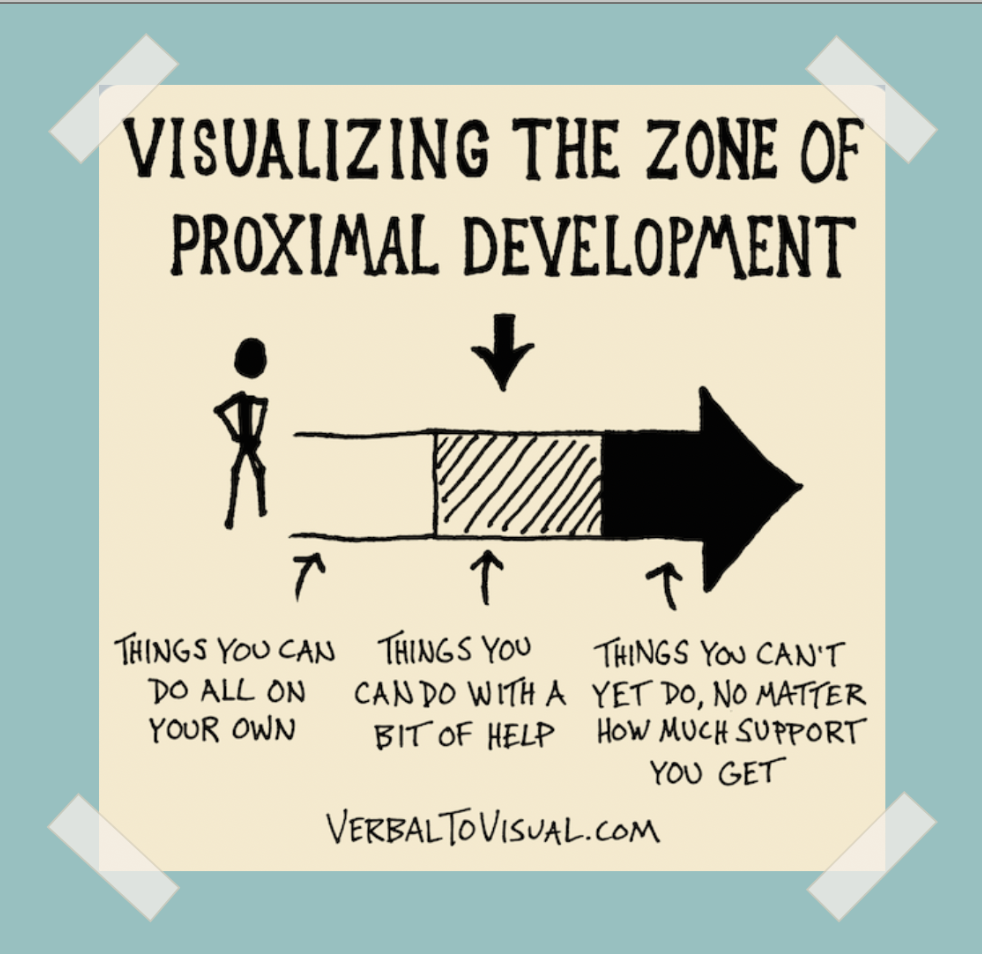
In the world of education, we frequently talk about Lev Vygotsky’s Zone of Proximal Development (ZPD). Let’s break down the academic jargon to something useable.
The ZPD is that space of "healthy discomfort" bridging what a child can already do independently and the skills they are not quite ready to tackle alone.
The core of this concept is simple:
Avoid Overwhelm: Children should never be pushed so far outside their comfort zone that their nervous system goes into panic mode. Real learning cannot happen in a state of high anxiety.
The Power of Proximity: Development happens best in the zone right next to a child's current capacity.
The Guide (or "Knowledgeable Other"): When a learner hits a wall, a teacher, parent, or peer (or YouTube video) meets them where they are and gently pulls them forward.
Without that supportive guidance, or if the leap is too far, the learner enters a frustration zone where growth stalls.
The Missing Variable: The Environment
While the traditional model of ZPD is brilliant in its simplicity and humanity, modern interpretations frequently contain a significant blind spot: they leave out the role of the environment in the learning process.
The physical space, the room dynamics, the presence of peers or siblings, and the specific demands of a task all exert pressure on the learning process. A learner does not exist in a vacuum, and the environment is never neutral.
The Environment in Action: A Tale of Two Tennis Courts
Let’s say you decide this summer to pick up tennis. (I’d say pickleball, except I don’t know how to play pickleball, so my own learning falls flat there. Tennis it is.)
You’ve taken a few lessons from a really nice tennis pro from your local club — she’s patient, knowledgeable, and very good at her job. You’ve got the racket handling, the lingo, the scoring; you’ve only hit the ball flat so far. Today’s lesson: learning to serve.
You go to a single court. It’s quiet. You’re the only people there. You’re a little nervous about how you’re going to do – you want to impress your instructor – but you feel safe.
And if your pro is any good, they’re using the 3 Ps. Both drive — “you’ve got this” — and nurture: when you get frustrated, reminding you that even Venus Williams practiced her serve many, many times. Motion and reflection: they videotape a few serves, play them back, ask “how did that one feel compared to the last one? What did you notice in your body?” Even exuberance and editing: there are three or four ways to try a serve, you try them all, you settle on the one that works for your body, and that’s the one you practice.
On a single, quiet court with your patient pro, you feel safe, supported, and ready to learn.
Now, take that exact same scenario, but change exactly one variable: the environment.
Same tennis pro, same skill level, same next step. —and move it to Centre Court at Wimbledon during a packed tournament, with Nadal and the Williams sisters watching from the front row.

Move it to Center Court at Wimbledon during a packed tournament …. What happens to the learning process?
What happens to the learning process?
Your anxiety spikes.
Your focus shifts from mechanics to basic survival.
Best case scenario, you do well under pressure, but even then, your m.o. shifts from learning to performing.
Worst case scenario, you shut down completely.
The lesson didn’t change. Your latent ability didn’t change. Only the environment changed.
This happens in daily life all the time. A student who can easily solve math problems at a quiet kitchen table might freeze during a timed classroom exam. A child who speaks confidently at home might shut down when asked to read aloud in front of thirty peers. The environment is never neutral.
The Spectrum of Accommodation
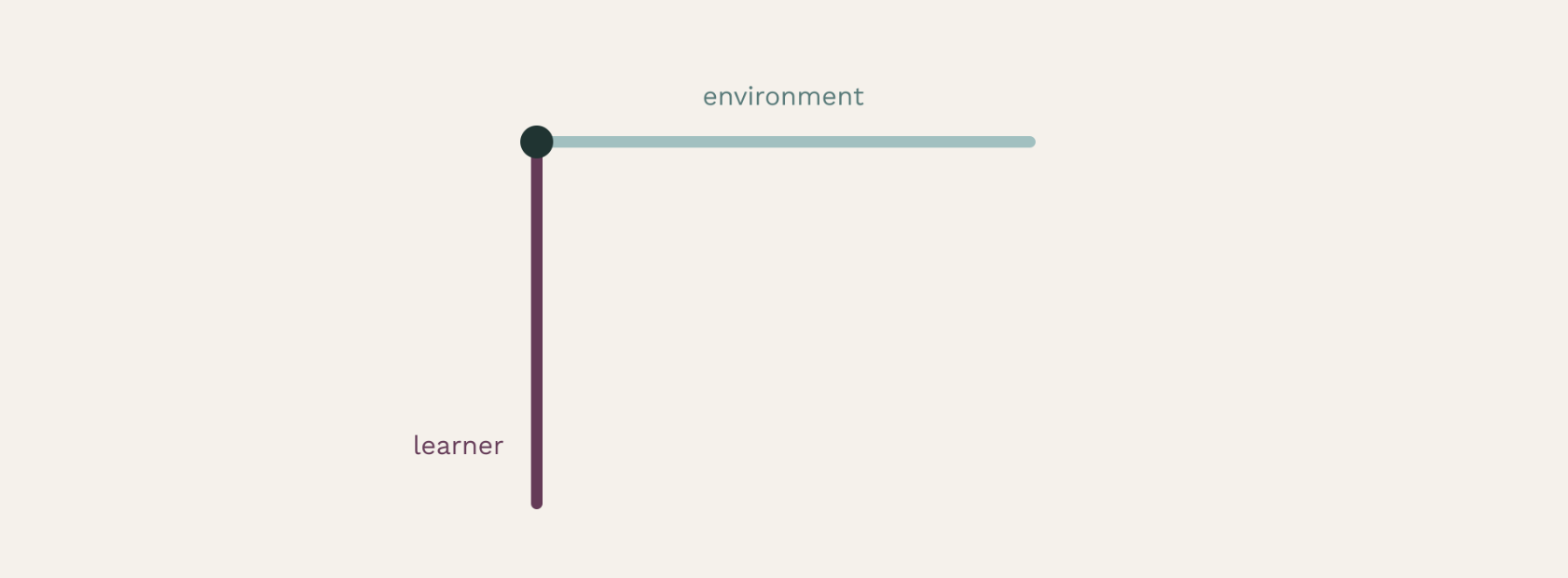
Accommodations are designed to alter the environment (tennis court) or the pathway to a goal without lowering the ultimate expectation. However, managing these adjustments at home and at school requires a delicate balance. Start by visualizing the relationship between a learner’s ability to adapt, and the environment’s ability to accommodate:
1. Over-Accommodation (The Danger of Zero Friction)
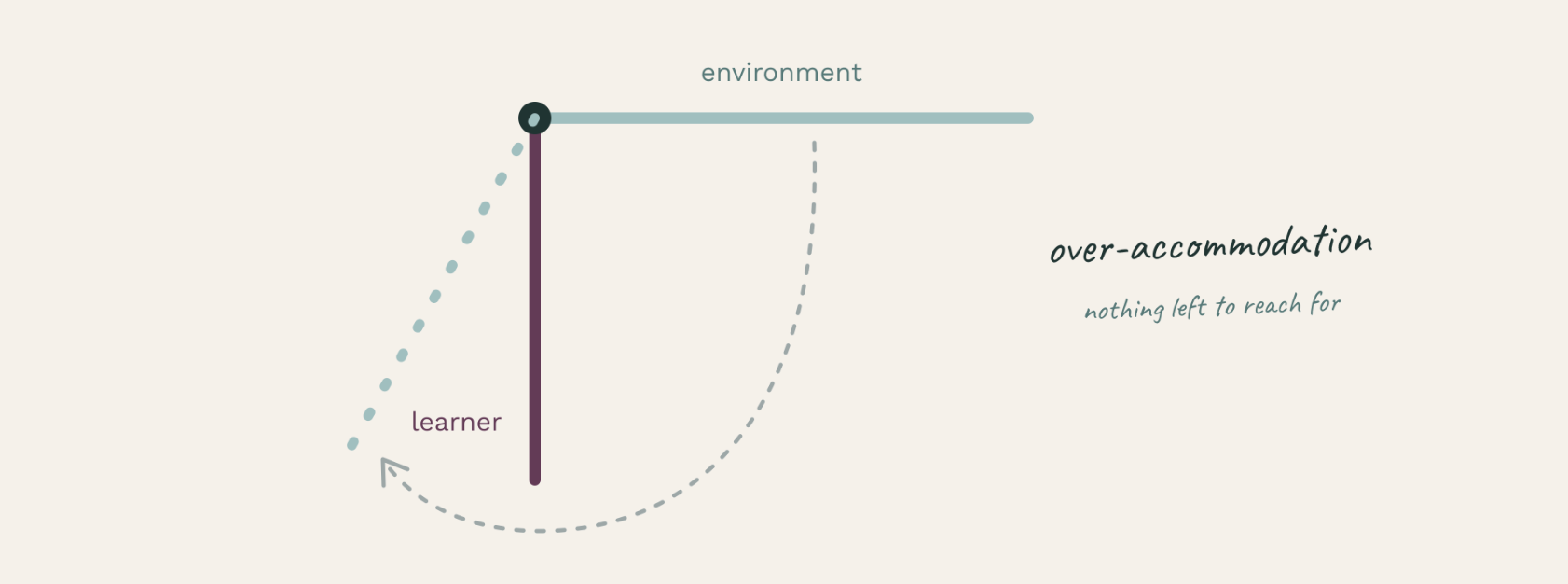
Out of love, care, and a desire to see children succeed, it is incredibly easy for both teachers and parents to inadvertently remove all friction (manageable discomfort) from the learning process.
When adults "run all the way around the bases" for a child — whether by writing down all their notes for them or stepping in to do their chores the moment they show frustration — the child stops learning. They are merely completing tasks and performing compliance, with the adults tagging them in just before crossing home base. The learner does not have the opportunity to build resilience and independence when the learning process is completed for them.
The Tennis Equivalent: Over-accommodation is like telling an anxious tennis student to practice in their living room with an imaginary racket and no ball. They won't be nervous, but they will never learn a functional serve. Sustainable learning requires a manageable amount of friction.
2. Rigidity (The Over-Reach)
On the opposite end of the spectrum sits absolute rigidity. This is the "my way or the highway" approach. When expectations are entirely rigid, and the distance between a child's current functional level and the expectations placed upon them is too vast, the learning expectations demand too much emotional currency (think the spoons in the Spoon Analogy).
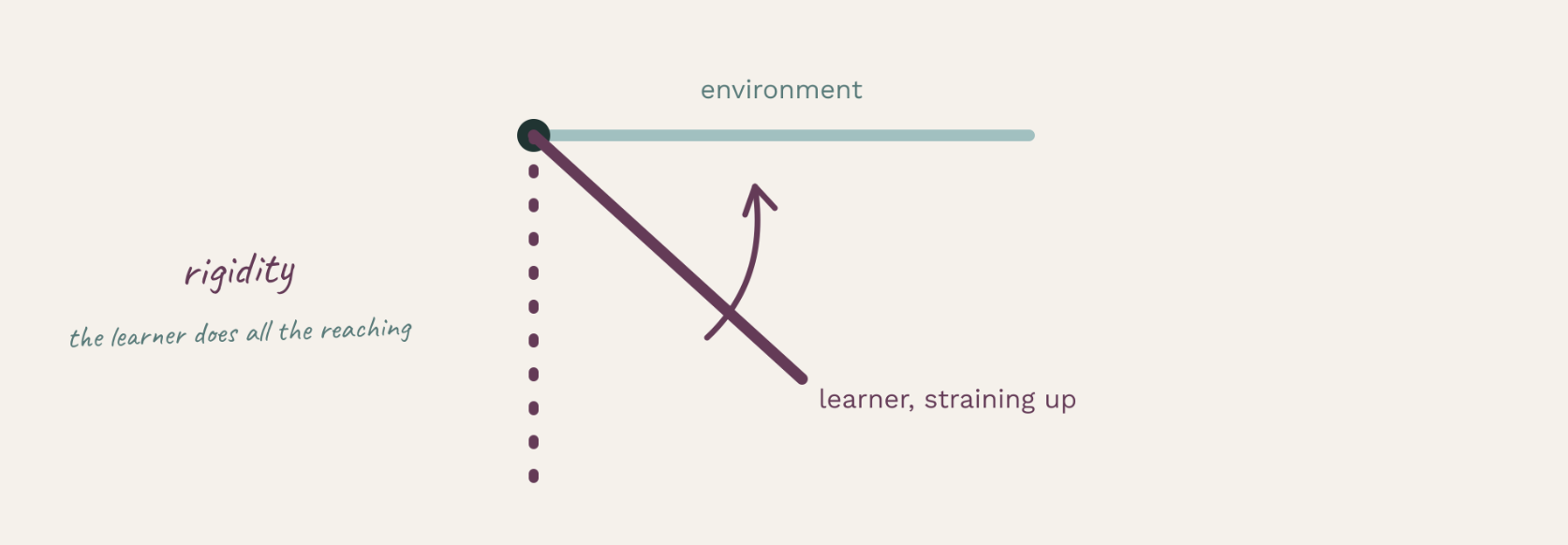
If a child attempts to bridge this gap through sheer force of will day after day, the result is inevitable: burnout, frustration, and shutdown.
What frequently looks like a behavioral issue, defiance, or a "bad attitude" at home or school is often simply a nervous system that has reached total exhaustion. For a neurodivergent student with fewer “spoons,” the breaking point may arrive even earlier.
The tennis equivalent: Rigidity can look like the expectation of a tennis student to serve at their highest capacity every practice session, constantly pushing them further to perfect their aim beyond their emotional ability to handle the demands of the coach, even if the coach thinks the child is capable. (more on this later). The student may burnout, lose confidence, and want to quit the sport altogether.
Finding the Sweet Spot Together
In order to achieve sustainable growth, our goal should be to locate the slender gap between a student’s ability to adapt and the environment’s ability to shift. This gap is where learning happens. When we find it, we can ask students to make the small, 2-degree shift, that when compounded over time leads to meaningful change.
Because learners are human, this isn’t a precise science — our adaptive edge changes with time and conditions. But seeking an appropriate range helps parents and teachers be the best guides possible for their children / students:
Targeted Accommodation: If a child is struggling, the environment, tools, and pathways should be adjusted to allow for a manageable, two-degree shift at a time. This requires ongoing collaboration between teachers and families to ensure consistency across environments.
Active Adaptation: On the learner's side, there must be a willingness to "switch on"—to fire the neurons, trust the adults guiding them, and expend effort even when the process becomes difficult.
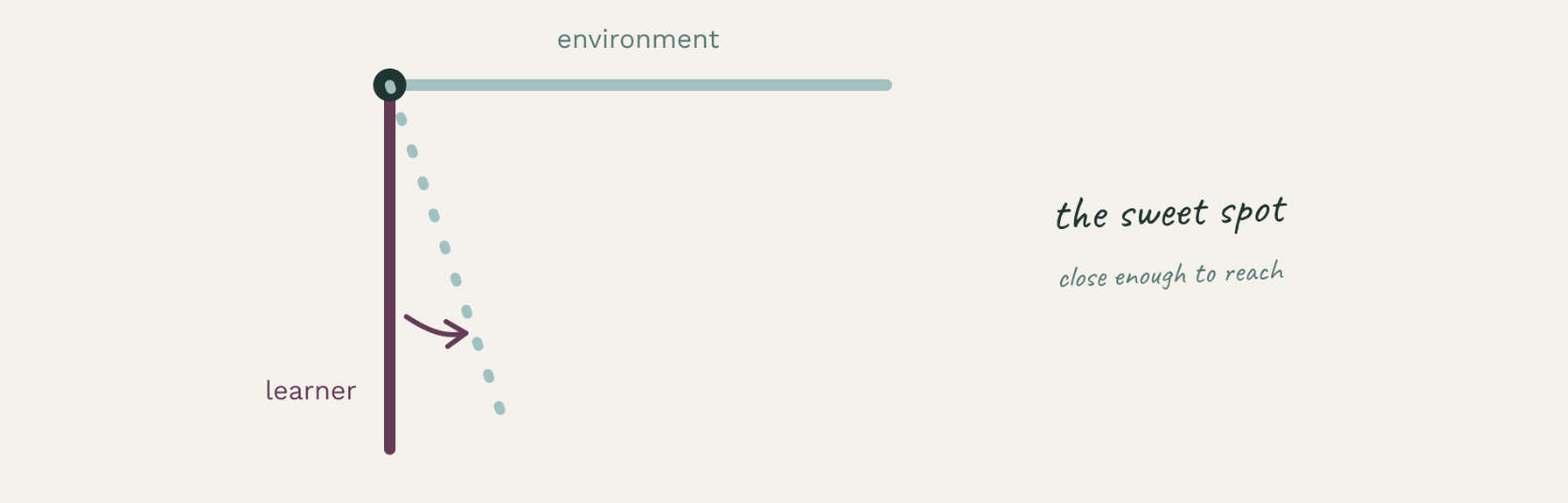
When adults adjust environmental roadblocks to a realistic, scaffolded level, children feel appropriately challenged and safe enough to activate and lean in.
Spend a minute here and see if you can identify a few times that your students or child were being over-accommodated or stretched too far. What were the cues? What tweaks could have brought the environment closer to their adaptive edge?
The next installment addresses thinking errors we make that keep ourselves and our students stuck. From there, we get into actionable strategies for your home, classroom, and the spaces in between.
In the meantime, I invite you to start playing with the idea of finding your own adaptive edge — is there a habit you’ve been trying to build or a goal you’ve been eyeing that feels too big to achieve? What if you tried shrinking the gap and taking on one two-degree shift at a time?
Rebekah Jordan, M.Ed., is founder and partner at Crossbridge Consulting, where she helps families navigate school placement, therapeutic programs, and the decisions that come with a child who needs something different.